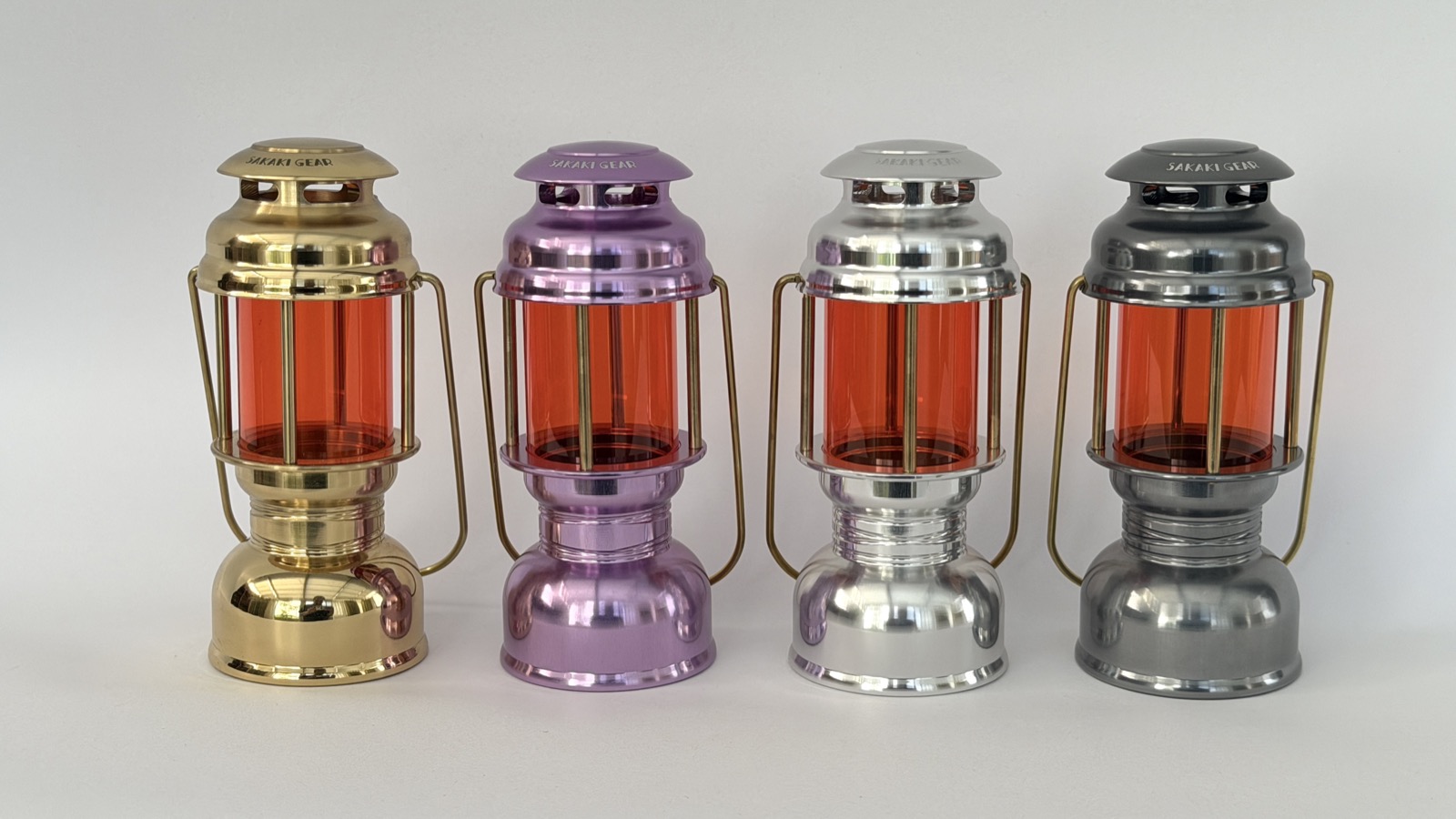
Every SAKAKI Gear cover is cut from a solid billet, and for Akatsuki you can choose the billet: brass, or aluminum in three anodized finishes. Same shape, same threads, same Goal Zero light inside. What changes is weight, color, how it ages, and how it photographs. This guide gives you the honest differences so you pick once and do not wish you had picked the other.
The short version
| Solid brass | Anodized aluminum (silver, gunmetal, wisteria) | |
|---|---|---|
| Weight (Akatsuki, assembled) | approx. 450 g (15.9 oz) | noticeably lighter; aluminum is about one third the density of brass |
| Color on day one | Bright gold, slightly warm | Even, matte-to-satin color: silver, dark gunmetal, or the purple-blue wisteria |
| Color after a year | Darker, uneven, warm patina where hands touch it | Unchanged; anodizing is a hard oxide layer, not a paint |
| Scratches | Polish out with a cloth and brass polish | Show as a lighter line and stay |
| Feel in the hand | Dense, cold, “heavier than it looks” | Light, slightly warmer to the touch |
| Best with | Wood, leather, canvas, warm light | Black tables, dark kits, minimal setups, photography with cool tones |
| Price (Akatsuki) | $329 for every finish, US shipping included | |
Weight is the first thing you notice
Brass is heavy. A brass Akatsuki on a Lighthouse Micro Flash weighs about as much as a full 500 ml water bottle, and the first time someone picks it up they usually say so. That weight is the point for a table lantern: it does not tip on a folding table, it does not swing in wind when it hangs, and it sits on a wooden surface with the quiet thud of a real object.
It is also the argument against brass if you carry your kit on your back. The aluminum finishes give you the same silhouette at a fraction of the weight, which is why hikers and bikepackers who want the look tend to choose gunmetal or silver, and car campers choose brass without thinking about it.
How each one ages
Brass darkens, and that is the feature
Machined brass leaves the lathe bright gold. Within a few trips, fingerprints and humidity start to dull it; after a season it has a darker, warmer tone with lighter patches where the cap and ring are handled. This is patina, not damage. Many owners prefer it, because it makes the lantern look like it has been places. If you want the bright finish back, a soft cloth and household brass polish take five minutes and you are back to day one. You can do this as often or as rarely as you like.
Anodized aluminum stays where it started
Anodizing is not paint. It is a hard oxide layer grown into the surface of the aluminum, dyed silver, gunmetal, or wisteria, then sealed. It does not tarnish, it does not chip, and it does not change color with handling. What it does do is show a scratch as a thin lighter line if the cover meets a tent stake or a rock, and that line cannot be polished out the way brass can. Kept in its case between trips, an aluminum Akatsuki looks the same for years.
Color, and how the light comes through
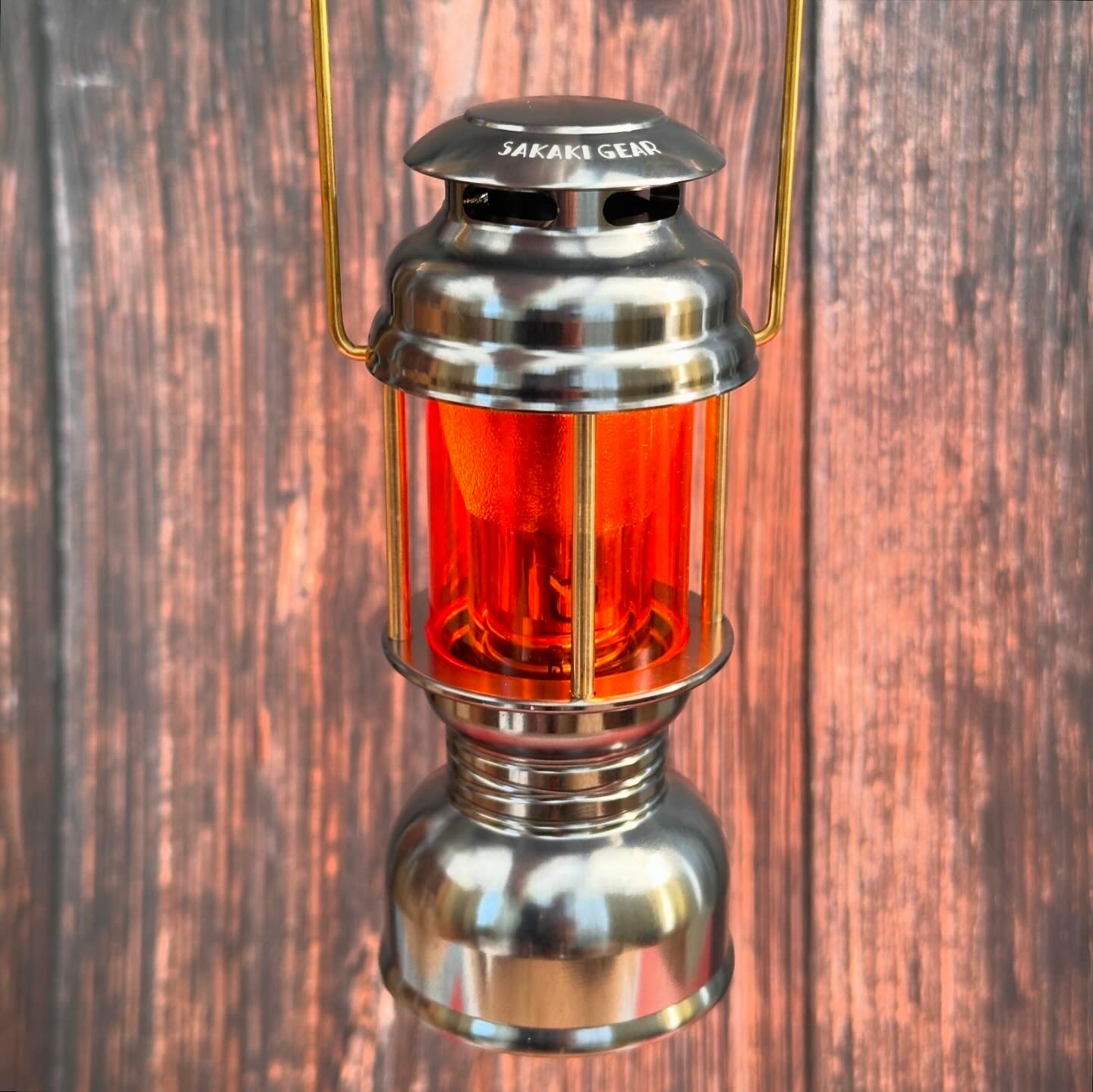
The warm color of the light itself comes from the orange inner tube, not from the metal, so a silver Akatsuki glows exactly as warm as a brass one. What the metal changes is the frame around that glow. Brass reflects the warm light back into itself and looks like a candle in a brass lantern. Gunmetal disappears into the dark and leaves only the glow. Silver reads cleanest in daylight photos. Wisteria is the odd one: a purple-blue that looks almost black at night and shows its color in daylight, chosen by people who want a piece nobody else at the campground has.
Which one for which camper
- Car camper, wooden table, classic kit: brass. It ages with the rest of the kit.
- Hiker or bikepacker: gunmetal or silver. Same look, far less weight.
- Black table, dark gear, vehicle setup: gunmetal. It is the finish that matches most modern kits.
- You photograph your setups: brass at night, silver by day. Brass photographs warm and rich in low light; silver photographs clean in daylight.
- Gift, and you do not know their kit: brass. It is the finish the series was built on, and the one people recognize as SAKAKI Gear.
- You want something nobody else has: wisteria.
If you are choosing between brass and a black finish specifically, brass vs black lantern covers goes into the mood each one builds. The care guide covers polishing, storage, and what not to use on either metal.
Care, in sixty seconds
- Brass, after a trip: wipe with a dry soft cloth. That is all. If you want it bright, a pea-sized amount of brass polish on a cloth, rub, buff, done. Avoid steel wool and abrasive pads; they leave scratches you cannot polish out.
- Brass, if you like the patina: do nothing. Keep it out of a damp gear box for weeks at a time and it will darken evenly rather than in spots.
- Aluminum, after a trip: wipe with a damp cloth, dry it. No polish; it does nothing on anodizing and can dull the color.
- Both: back in the case between trips. The case is there to stop the cover meeting a tent stake in a bin, and it works.
Mixing finishes on one table
If you own two, a brass and a gunmetal Akatsuki on the same table look intentional; a brass and a silver look like a matching problem. The rule that works: one warm metal, one dark metal, never two bright ones. If you are buying your second cover to sit next to a brass one, gunmetal or wisteria. Next to a gunmetal one, brass.
What is the same on every finish
The machining. Brass and aluminum Akatsuki are cut on the same CNC lathes in our shop in Kasugai, to the same drawing and the same tolerances we hold for industrial parts. The three-part construction (cap, body, threaded bottom ring), the exposed switch so you can dim the light with the cover on, the orange inner tube, and the dedicated case are identical. So is the fit: every Akatsuki fits the Goal Zero Lighthouse Micro Flash and only the Micro Flash. If you own a standard Lighthouse Micro, the compatibility guide shows which covers fit it instead.
Brass only, for the rest of the line
Mikasa, Hatenaki, the Hajimari Set, and Mahoroba are machined from solid brass. Akatsuki is the one piece where you choose the metal, which is one reason it is the place most people start.
Ready to pick? Choose your Akatsuki finish, or read how to choose a Goal Zero lantern cover if you are still deciding which model, not just which metal.