In Japan, the Goal Zero Lighthouse Micro is not just a camp light. It is the most dressed-up small lantern in the country: there are leather sleeves, wooden and marquetry shades, acrylic diffusers, folded-paper shades, stainless and brass caps, amber globes and machined metal housings made for it by dozens of small makers. SAKAKI Gear is one of them, a 12-person machining shop in Kasugai, Aichi, whose first brass housing for this light was crowdfunded by 657 backers in early 2024 and covered by Gizmodo Japan and Lifehacker Japan. This page explains the scene to a US reader, where our covers sit in it, and what carries over to a Lighthouse Micro Flash bought in the United States.
Quick answers
| Question | Short answer |
|---|---|
| Is there really a “custom scene” for a $40 lantern? | Yes. Japanese camp blogs run roundups of shades, covers and caps for the Lighthouse Micro series with twenty or more products from small makers in one article. We checked two such roundups, from August 2022 and April 2025, for this page. |
| What kinds of customs exist? | Soft sleeves (leather, fabric), shades that sit on top (wood, acrylic, folded paper, fabric, metal), under-caps with magnets or tripod threads, colored globes, and full machined housings that enclose the light. The table below sorts them. |
| Where does SAKAKI Gear fit? | In the smallest group: solid brass and aluminum housings machined from bar stock by a precision shop, with the light dropped in from the top. No glue, straps or tools. |
| Which lights do these fit? | Most Japanese customs are made for the Lighthouse Micro Flash. Ours: Akatsuki and Mikasa fit the Micro Flash only; Hajimari and Hatenaki fit the Micro and the Micro Flash. Nothing we make fits the Micro Charge. |
| Can I buy the Japanese ones from the US? | Most Japanese garage brands sell only domestically. SAKAKI Gear ships to the US from this store with US shipping and prepaid duties in the price. |
Why Japan dresses up this particular lantern
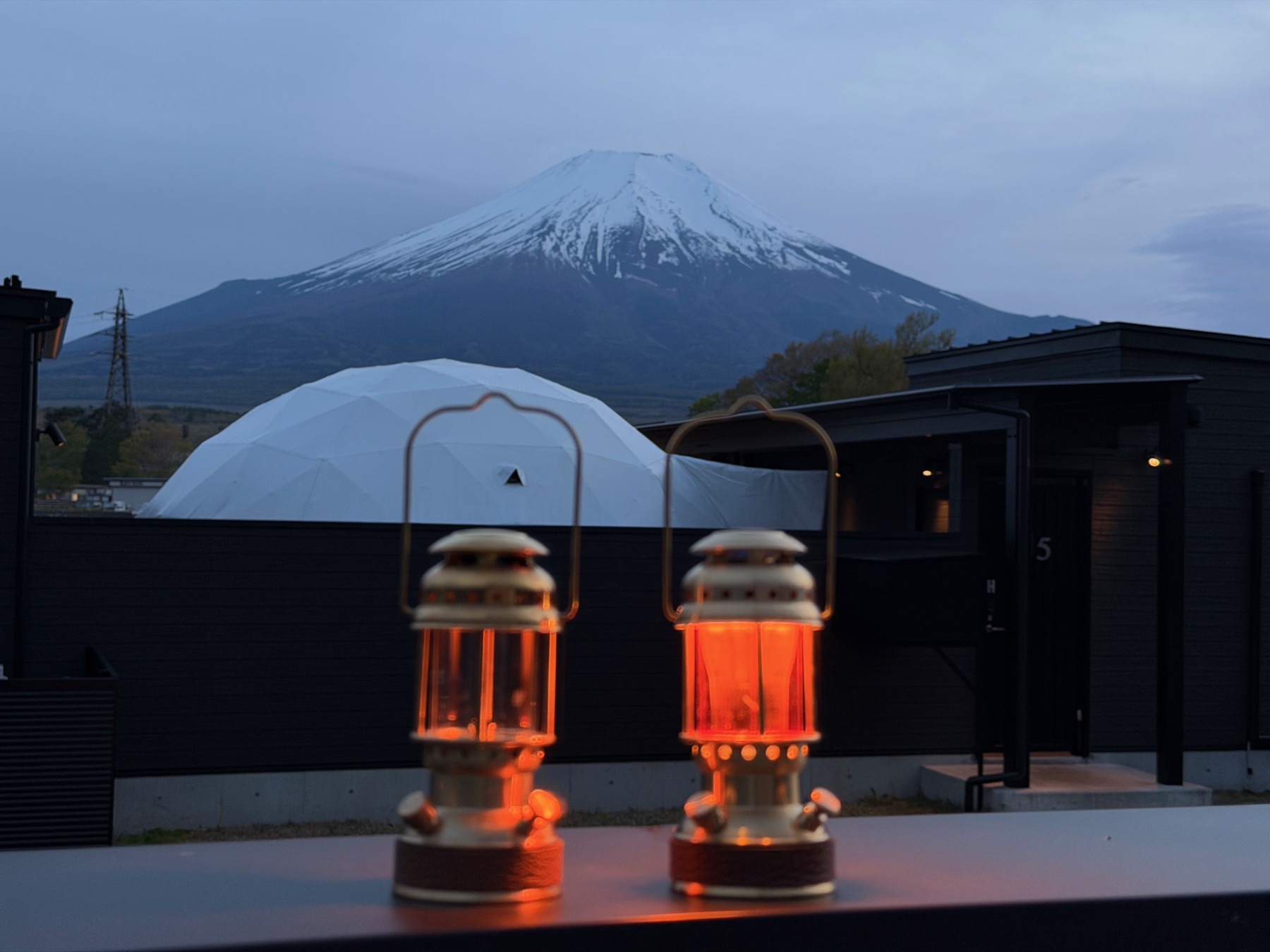
Three things came together. The Lighthouse Micro series is small (the Micro Flash body is 3.66 by 1.5 inches and weighs 2.4 ounces, per goalzero.com, checked 12 October 2026), it hangs from a fold-out leg, and it is cheap enough that owners are happy to spend more on the accessory than on the light. In Japan, where campsites are compact and the table is the center of the evening, a lantern at table height is looked at more than it is read by. So the question became what the light should look like, not just how bright it is.
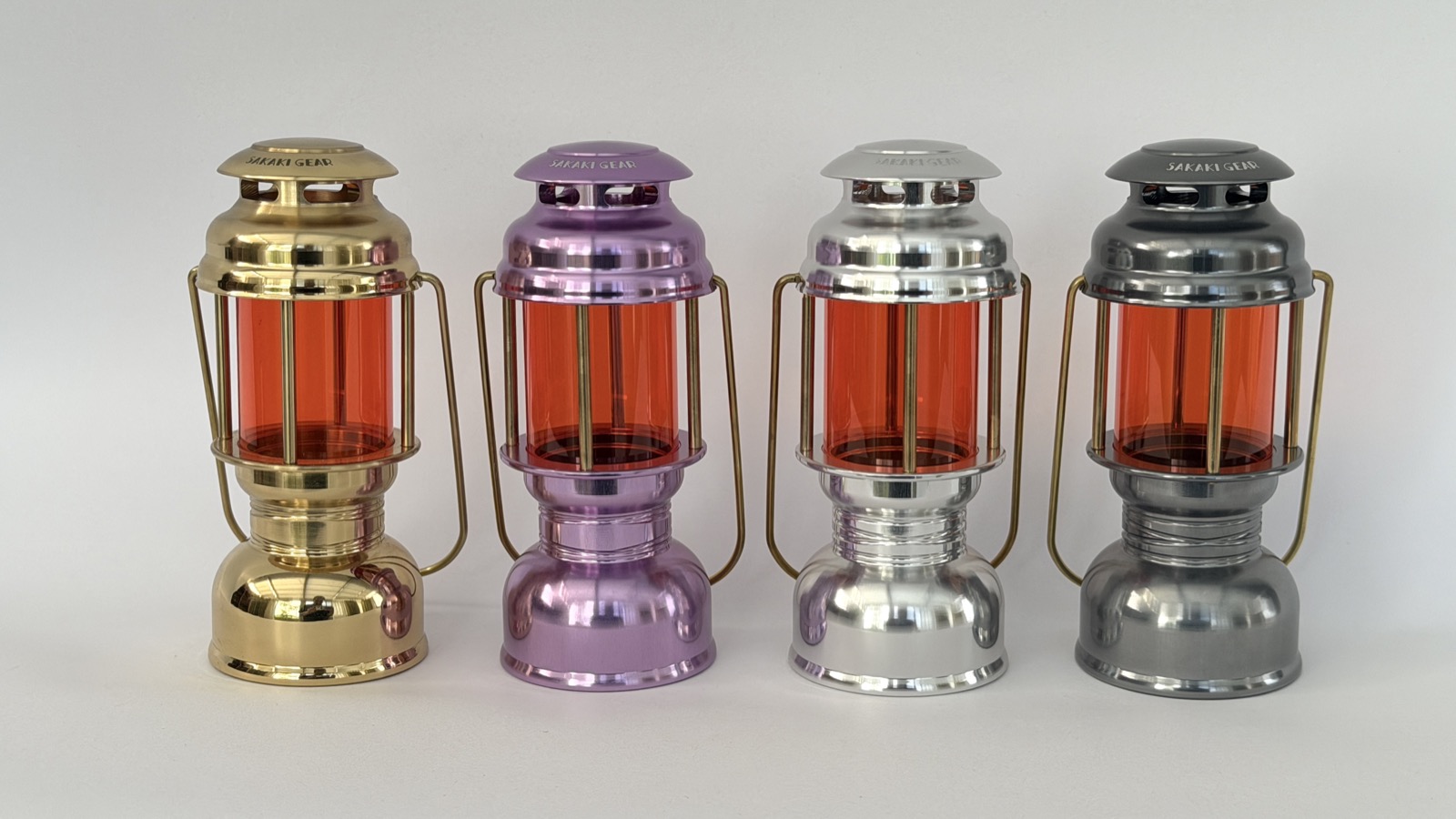
The result is a cottage industry. Leather workers made sleeves that soften the plastic body. Woodworkers turned shades, including yosegi marquetry pieces in the traditional Hakone style. Fabric brands made Cordura shades with reflectors inside. Metal workers made stainless caps and brass shades. A few shops, ours among them, went further and machined a complete housing so that the Goal Zero light disappears inside something that reads as an oil lantern from across the site.
The main types, sorted
This is a map of the categories we see on Japanese shelves and in the roundups, not a ranking. Each solves a different problem, and many owners combine two: a sleeve for grip, a shade for the glare.
| Type | Typical materials | What it changes | Fit notes |
|---|---|---|---|
| Sleeve or body cover | Vegetable-tanned leather, suede, braided cord, stickers | Grip, scratch protection, a warmer look in the hand. Light output unchanged | Usually cut for the Micro Flash body; some leather sleeves are sold with a cord loop for hanging |
| Top shade | Wood, yosegi marquetry, acrylic, folded paper, Cordura nylon, canvas, stainless steel, brass | Pushes light down onto the table and cuts glare at eye level. Fabric shades pack flat | Sits on the top of the light or clips to the leg; check the shade’s own listing for Micro vs Micro Flash |
| Under-cap or base | Aluminum, stainless, brass | Adds magnets or a tripod thread so the light stands or sticks to a pole | Replaces nothing; threads onto or around the bottom |
| Colored globe | Amber or tinted acrylic | Warms the 3800K white to something closer to a flame | Slides over the light tube |
| Full machined housing | Solid brass, aluminum (anodized or raw) | Replaces the silhouette entirely: the LED becomes the flame in a metal lantern body. Adds weight and presence; brass develops a patina | Cut to one body length. SAKAKI Gear housings fit the Micro Flash (3.66 in) and, for Hajimari and Hatenaki, the Micro; none fit the 4.4 in Micro Charge |
Two things a US reader should know. First, almost none of these makers ship outside Japan, so the scene is visible on Instagram but hard to buy into. Second, Goal Zero is sold in Japan through a distributor and the lantern is a mainstream camp item there, which is why so many people own one to dress up.
Where SAKAKI Gear sits in that scene
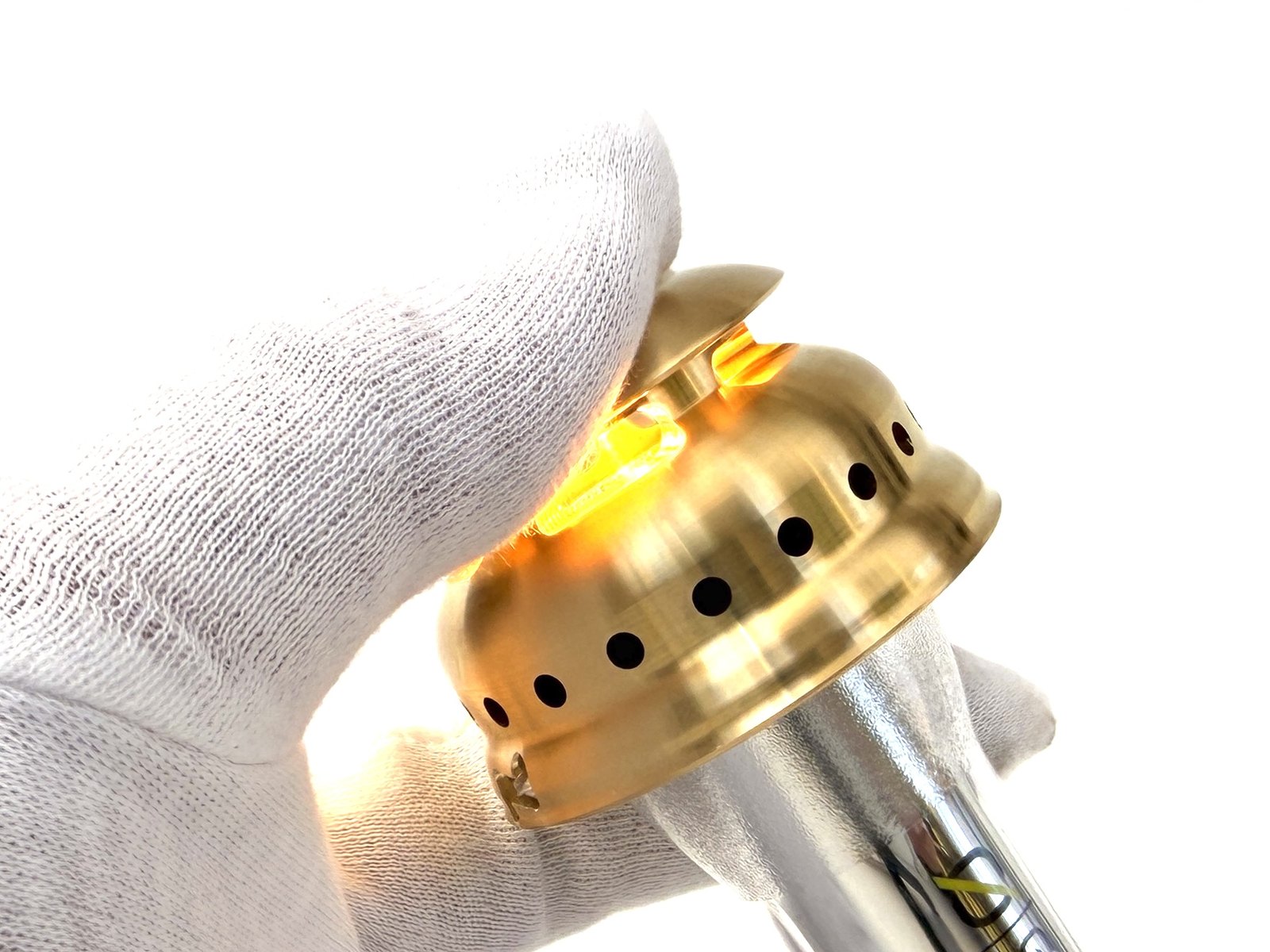
Sakakibara Kouki is a machining subcontractor in Kasugai, Aichi, that bought a 5-axis machining center in 2018 and, after two failed export attempts with a brass golf putter, decided to make something under its own name. The first object was Namonaki Lantern Akatsuki, a brass or aluminum housing for the Lighthouse Micro series with a top cap that still operates the Goal Zero button. “Namonaki” means “nameless”: the lantern has no name of its own because the light inside is Goal Zero’s.
Akatsuki launched on machi-ya, a crowdfunding storefront run by CAMPFIRE, in January 2024. It closed with 657 backers and 11,549,515 yen. The following year Mahoroba, a brass lantern body that runs on either the Lighthouse Micro Flash LED adapter or a paraffin oil kit, was backed by 484 supporters on Makuake. Those two campaigns are the reason the brand exists; the English store came after.
During the Akatsuki campaign two of Japan’s largest tech and lifestyle sites wrote about it:
- Gizmodo Japan, 24 January 2024: an article introducing Akatsuki as a way to give the Goal Zero lantern a nostalgic oil-lantern look in aluminum or brass, describing the maker as a machine shop in Aichi, the no-tools fit for the Lighthouse Micro and Micro Flash, and the brass version’s patina as something to “grow”.
- Lifehacker Japan, February 2024 (page updated 23 February 2024): a follow-up as the pre-sale neared its end, again describing the product as a small-batch custom case from a town factory.
Honest note on those articles: both are labeled as PR content on the publishers’ sites. machi-ya is operated by the same media group that runs Gizmodo Japan and Lifehacker Japan, and campaign-linked articles there carry a “Buy PR” tag. They are accurate about what the product is and who makes it, and they are the reason many Japanese campers first heard the name, but they are not independent reviews. Independent coverage, in the sense of a reviewer buying one and writing it up, exists on Japanese camp blogs and on Instagram; we do not reproduce those here because we cannot verify every claim in them.
What is sold to the US today
These are the machined housings on this store as of 12 October 2026. Prices are in US dollars and include US shipping and the US import duty, which we prepay in Japan so nothing is collected at your door.
| Product | What it is | Fits | Price |
|---|---|---|---|
| Namonaki Lantern Hajimari Set | Ready-to-use set with the Goal Zero unit already installed; the easiest first purchase | Lighthouse Micro, Micro Flash | $229 |
| Namonaki Lantern Akatsuki | The crowdfunded original and the signature cover, in brass or anodized aluminum finishes | Micro Flash only | $329 |
| Namonaki Lantern Hatenaki | The flagship: solid brass, shade cut to spread a soft even glow, handle alone takes over two hours to machine | Lighthouse Micro, Micro Flash | $389 |
| Namonaki Lantern Mikasa | The premium, more architectural piece for collectors | Micro Flash only | $459 |
Two more pieces in the lineup are not Goal Zero covers, so they are outside this page: Kizashi ($409) is a machined cover for the Ledlenser ML4, and Tamayura ($409) is a standalone paraffin oil lantern, the oil-spec version of Akatsuki.
Every one is cut from bar stock on the same machines that make industrial parts for the shop’s regular customers, deburred and inspected by hand, and shipped from Kasugai by EMS. How to pick between them is covered in How to choose a Goal Zero lantern cover, and the exact fit by model in the compatibility guide.
What carries over to a US-bought Lighthouse Micro Flash
Everything. The Lighthouse Micro Flash sold on goalzero.com is the same 3.66 by 1.5 inch body the Japanese scene is built around, so a housing cut for it in Kasugai fits a light bought in Utah. The only model to watch is the Micro Charge, which adds a USB output port and is 4.4 inches long at the same diameter (goalzero.com, checked 12 October 2026). That extra length is why none of our housings, and most Japanese customs, seat on it. If you are not sure which you own, Lighthouse Micro vs Micro Flash vs Micro Charge shows how to tell in three seconds.
What does not carry over is the Japanese domestic retail scene itself: the leather and wood makers mostly sell through Japanese marketplaces and events. If you want a shade rather than a housing, Goal Zero Lighthouse Micro shade covers the clip-on and DIY options available to a US buyer and when a brass cover makes more sense.
Frequently asked questions
Why are there so many Goal Zero Lighthouse Micro customs from Japan?
The light is small, inexpensive, mainstream in Japan, and used at table height where it is looked at all evening. That combination invited leather, wood and metal makers to treat it as a blank. Roundup articles on Japanese camp sites list twenty or more such products.
Is SAKAKI Gear a Goal Zero product?
No. SAKAKI Gear is an independent brand of Sakakibara Kouki, a machining shop in Kasugai, Japan. Our covers are made for the Goal Zero Lighthouse Micro and Micro Flash but are not made, licensed or endorsed by Goal Zero. The light is sold separately.
Was Akatsuki really crowdfunded?
Yes. It ran on machi-ya (CAMPFIRE) from January 2024 and closed with 657 backers and 11,549,515 yen. Mahoroba followed on Makuake with 484 backers. Both campaign pages are linked from Our Story.
Were the Gizmodo Japan and Lifehacker Japan articles reviews?
No. They were campaign-linked articles labeled as PR on both sites, published while the machi-ya pre-sale was running. They describe the product and the maker accurately but are not independent tests.
Can I use a Japanese-market shade on a US Lighthouse Micro Flash?
Physically yes, the body is the same, but most Japanese makers do not ship to the US. SAKAKI Gear ships from Japan to US addresses with shipping and duties already in the price.
Does a machined housing change the light’s brightness or battery?
The housing is passive and draws nothing, so battery life is unchanged. Brass and aluminum walls block side light and send it up and down, so the table gets more of the light and your eyes get less glare. See Lighthouse Micro Flash battery and charging for what Goal Zero publishes about runtime.
Sources checked
- Gizmodo Japan, article on Namonaki Lantern Akatsuki and the machi-ya campaign, published 24 January 2024, labeled Buy PR. Checked 12 October 2026.
- Lifehacker Japan, article on the Akatsuki pre-sale ending soon, page last updated 23 February 2024, labeled PR. Checked 12 October 2026.
- Makuake, Mahoroba project page (brass 2-way lantern, LED and oil, patent-pending switch). Checked 12 October 2026.
- Two Japanese camp-site roundups of Lighthouse Micro shades and covers, dated 17 August 2022 and 26 April 2025, used only for the categories of products that exist. Neither mentions SAKAKI Gear.
- goalzero.com product pages for the Lighthouse Micro Flash (3.66 x 1.5 in, 2.4 oz) and Lighthouse Micro Charge (4.4 x 1.5 in, 3.07 oz). Checked 12 October 2026.
- Prices from this store’s product pages, 12 October 2026.
Next
For the brand’s own account of the two campaigns, read Akatsuki, Mahoroba, and the crowdfunding story. For why machined Japanese gear feels the way it does in the hand, see Why Japanese machined camp gear feels different. For the full camp table, see the best Lighthouse Micro accessories.